Blood work tells the story your pet cannot share with words. You see the fur, the eyes, the energy. You cannot see organ damage, infection, or hidden pain. Blood tests help your veterinarian find problems early, often before you notice any change at home. Early answers mean simpler treatment, less suffering, and a better chance for a normal life. Many pets act fine even when something is very wrong. Routine blood work can catch kidney disease, liver trouble, diabetes, infections, and clotting problems. It also helps your veterinarian choose safe medicines and anesthesia. A Bellingham vet may suggest blood tests before surgery, during senior checkups, or when your pet seems “just a little off.” This is not extra. It is basic medical care. When you agree to blood work, you protect your pet, you give your veterinarian clear facts, and you give yourself fewer regrets.
Why Blood Work Matters For Pets Of Every Age
You want to know what is happening inside your pet. Blood work gives that view. It shows how the body is working in real time. It also creates a record over your pet’s life.
Veterinarians often group blood tests into two types. These help answer different questions.
- Screening tests. Used when your pet seems healthy. These look for hidden problems.
- Diagnostic tests. Used when your pet is sick. These search for the cause of symptoms.
According to the American Veterinary Medical Association, routine blood work is a key part of wellness visits, especially for older pets.
Common Types Of Blood Tests And What They Show
Different tests look at different body systems. Together they give a clear picture.
- Complete Blood Count (CBC). Counts red cells, white cells, and platelets. This helps find anemia, infection, inflammation, some cancers, and clotting problems.
- Chemistry panel. Measures enzymes, proteins, sugars, and salts. This helps check liver, kidneys, pancreas, and general balance of fluids.
- Electrolytes. Checks sodium, potassium, chloride, and others. This guides treatment for vomiting, diarrhea, kidney trouble, and heart rhythm issues.
- Thyroid tests. Common in older pets. Low thyroid in dogs and high thyroid in cats can change weight, heart rate, and behavior.
- Blood sugar tests. Help find and track diabetes and low blood sugar states.
- Clotting tests. Help judge bleeding risk before surgery or when bleeding or bruising appears.
When Your Veterinarian May Recommend Blood Work
You might hear a blood test suggestion at times that surprise you. Each time has a clear reason.
- Before anesthesia or surgery. Blood work checks organ function and clotting. This lowers risk during sedation and surgery.
- During yearly or twice yearly exams. Especially for pets over seven. This creates a baseline and may find early disease.
- When your pet shows new symptoms. Such as weight change, thirst, vomiting, diarrhea, coughing, or behavior shifts.
- When your pet takes long term medicine. Many drugs stress liver or kidneys. Regular tests watch for harm.
- Before starting new medicines. Blood work can confirm that organs can handle the drug.
Each test is a tool. It guides safer choices and avoids guesswork.
How Blood Work Protects Your Pet
Blood work protects your pet in three clear ways.
- Early detection. Many diseases grow quietly. Blood changes show up before clear outward signs.
- Safer treatment. Results show what drugs and doses are safe. They also show when treatment needs to change.
- Better planning. You can plan care and costs with clearer facts, not fear or doubt.
For example, early kidney disease might only show as a small change in blood values. Your pet may still eat, play, and look normal. With early warning, you and your veterinarian can adjust diet, fluids, and medicines. This can slow damage and stretch out good years.
Sample Blood Work Uses At Different Life Stages
Life Stage | Typical Blood Tests | Main Reasons |
|---|---|---|
Puppies and Kittens | CBC, basic chemistry, some infectious disease tests | Check for anemia, infection, birth defects, and safe vaccine timing |
Healthy Adults | CBC, chemistry, heartworm and tick disease tests | Build baseline values and check for early heartworm or tick disease |
Seniors | CBC, full chemistry, thyroid tests, urine tests | Find early kidney, liver, thyroid disease, and diabetes |
Before Surgery | CBC, chemistry, clotting tests | Judge anesthesia risk and bleeding risk |
Pets On Long Term Medicine | CBC, chemistry, drug level tests when needed | Watch for side effects and adjust dose |
What To Expect When Your Pet Has Blood Drawn
The process is quick and gentle. Most pets handle it well.
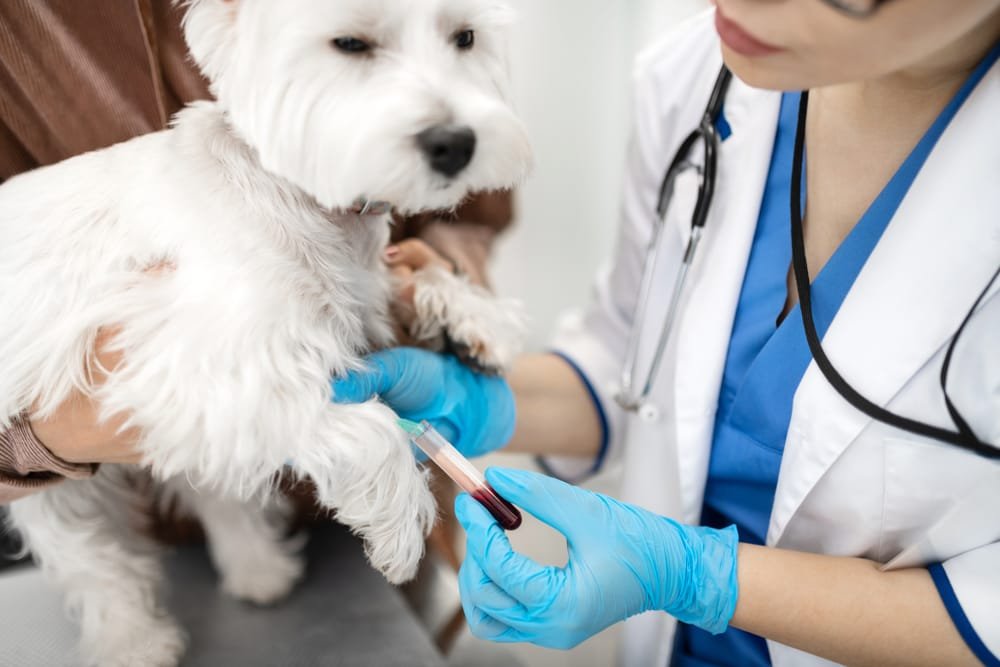
- Your pet may stand, sit, or lie on a padded table.
- A staff person holds your pet in a steady, calm way.
- The skin over the vein is cleaned.
- A small needle is used to collect blood into tubes.
- Pressure is held on the site for a short time.
You may see a small bruise or shaved patch. This fades fast. You can ask to stay with your pet if it helps you stay calm.
How Often Should Blood Work Be Done
Your veterinarian will guide you. Still, some general patterns help you plan.
- Young healthy pets. Often every one to two years.
- Middle aged pets. Often yearly.
- Senior pets. Often every six months.
- Pets on long term drugs. On a set schedule, for example every three to six months.
If your pet has a chronic disease, you may need tests more often during the first months. Once stable, the schedule may spread out.
Talking With Your Veterinarian About Cost And Results
Cost is real. You deserve clear talk about it. Ask for an estimate before testing. Ask what each panel looks for and how the results will change the plan.
After testing, ask three direct questions.
- What is normal and what is not.
- What this means for my pet today.
- What we will do next.
Request a copy of the report. You can keep it with your own records. You can compare it with future tests and see patterns over time.
Using Blood Work To Stand Up For Your Pet
Blood work is not just numbers. It is a record of your pet’s story. It shows strain, healing, and response to care. It helps you speak up with facts when you feel fear or doubt.
When you agree to needed blood tests, you do three hard but loving things. You face the truth about your pet’s health. You give your veterinarian the tools to act with skill. You give your pet a stronger chance at more good days with less pain.
Your pet trusts you without question. Using blood work is one clear way to honor that trust.